 Oluwadi
Investigating the Overlooked
Region
What
Who For
Analysis
Oluwadi
Investigating the Overlooked
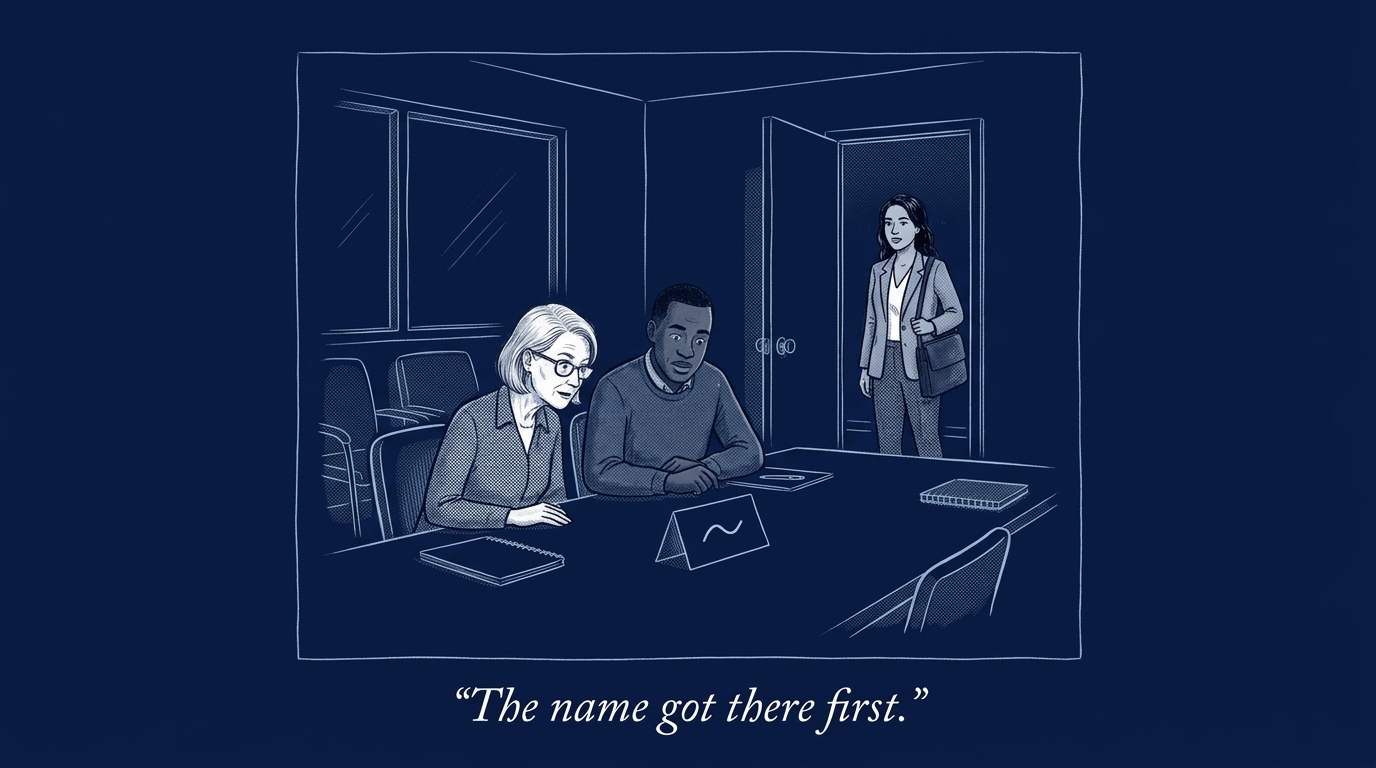
A company's name is the first thing a customer, a hire or a partner learns about it, before any product or pitch. It tells the world what the founder thinks they are building. This piece is about how companies get their names, what a name can tell you about the business, and the questions worth asking when you meet one.
Before a founder says a word about the product, the name has already told you something. Amazon's founder first incorporated the company as Cadabra, then changed it a few months later because a lawyer heard "Cadabra" as "cadaver."[1] He picked Amazon from a dictionary because it was exotic and different, and because the Amazon was the world's biggest river, which matched the size of bookstore he meant to build. A name starting with A also sorts to the top of an alphabetized list.[1] That is a thesis in one word: scale, and a place at the top of the list.
Palantir is a different kind of name. Peter Thiel named the company after the seeing-stone in Tolkien's books.[2] In those books the stones show far-off things, and in the same books they can be used to deceive whoever looks into them.[3] A founder who can say both halves, the promise and the danger, knows what they are building. A founder who can only say the flattering half has taken the name's shine and left its self-knowledge behind.
None of these is the right way. What they share is that the name ended up carrying a claim about what the company was for, and someone could explain it.
I ask the people behind a company to explain its name, and I treat the answer as information, not small talk. A good answer shows how much of the actual thesis the name carries and whether the founder's account matches it. A thin or retrofitted answer is a real, specific gap: the signal that should have arrived with the name now has to come from somewhere else, and that raises the bar on every other "why" I ask.
I grade it, I do not pass or fail it. A great name proves nothing about a company, and Google shows a name can acquire its meaning after the fact. What I am listening for is coherence: does what they built still match what the name promised?
I have named three things, and I should answer my own question.
Each name already holds the question its site asks. I did not plan that as a system. When I came to sort what each site was for, the names told me. Looking back, that is what a name is supposed to do.
A founder who has not thought about the second and third questions has probably not thought hard about the product either.
The accounts of how and why I named my own companies are mine. The reading of what each famous name says is my interpretation, not the founders' stated intent, except where a source says otherwise.