 Oluwadi
Investigating the Overlooked
Region
What
Who For
Analysis
Oluwadi
Investigating the Overlooked
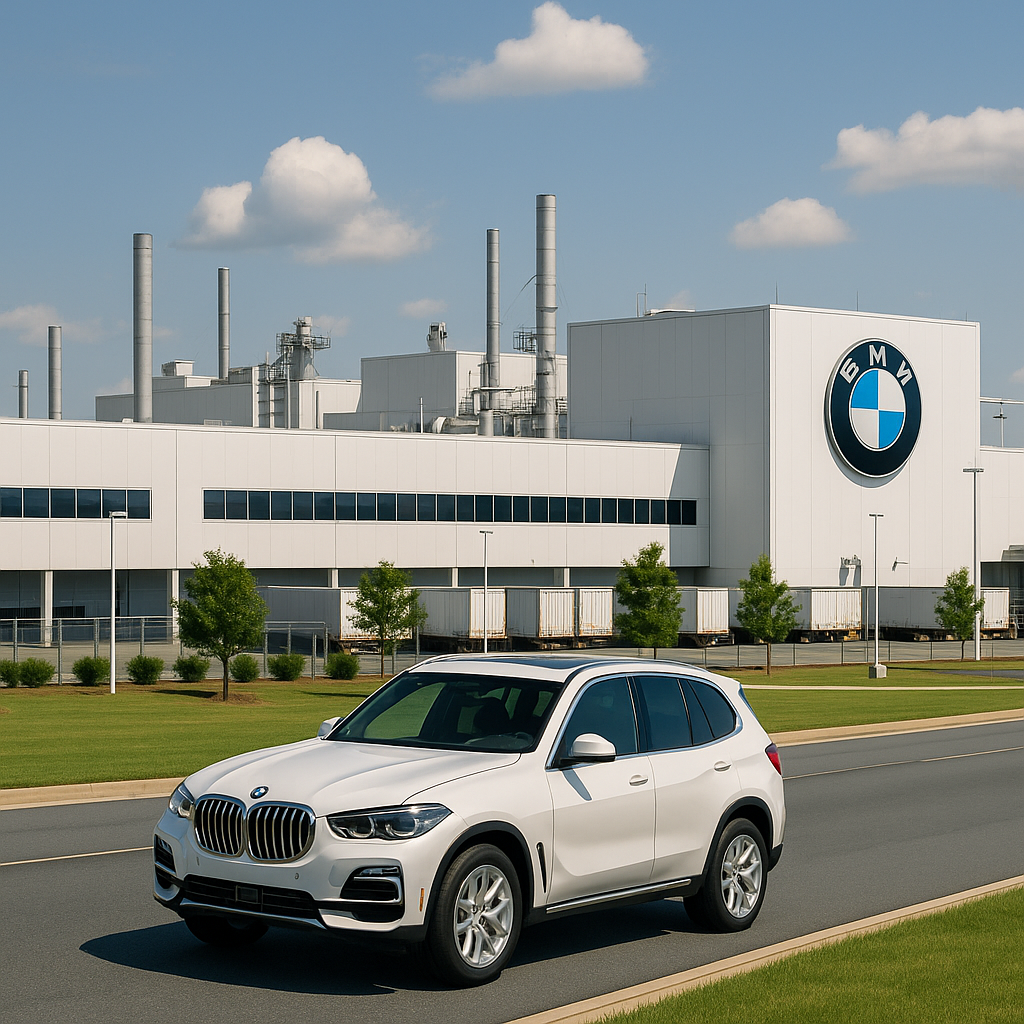
America's largest single vehicle exporter by value isn't Ford, GM, or Tesla. It's a plant in Spartanburg, South Carolina that builds cars for a German company, and it has held that title for more than a decade running.[1] In 2025, BMW Manufacturing shipped nearly 200,000 vehicles out of Spartanburg, worth $9 billion — and from 2014 through 2025 alone, the plant exported almost 3 million vehicles worth a combined $113 billion.[1]
Spartanburg isn't just BMW's biggest U.S. operation. It's BMW Group's single largest plant in the world, full stop — bigger than anything the company runs in Germany.[2] The numbers are large enough to be genuinely hard to picture: more than 11,000 employees on a 10-million-square-foot campus, assembling over 1,500 vehicles a day, roughly half of them loaded onto ships bound for nearly 120 countries.[2] BMW has put almost $16 billion into the site since choosing it in 1992, and 2025's production — 412,799 vehicles — was the third-highest year in the plant's 32-year history.[1]
2025 was also the year BMW ran headfirst into new U.S. tariffs on imported auto parts — not just raw materials this time, but the components themselves, including EV-specific parts like electrical steel. The company estimated the tariffs would cut its global operating margin by roughly 1.25 percentage points.[3] A separate Trump-EU trade deal that summer cut the tariff on vehicles exported back to Europe to 15 percent, which covers most of what Spartanburg actually ships.[4] And Spartanburg itself sits inside a U.S. foreign-trade zone, which lets parts imported for vehicles built specifically for export avoid a layer of the new tariffs altogether — a structural advantage the plant already had, not a new one built to dodge the policy.[5]
Rather than pull back, BMW has floated adding shifts at Spartanburg to raise output by as much as 80,000 additional vehicles a year, partly to absorb exactly this kind of policy shock with scale rather than retreat from it.[5] It's a genuinely different posture than a lot of manufacturing is taking under the same trade pressure: the plant that's already the biggest thing of its kind on the site, in the state, and in the company, is the one being asked to get bigger, not the one being quietly wound down.
None of this required a bailout, a criminal case, or a decade of concealment to get right. A foreign automaker picked a site in 1992, built the largest version of its own factory anywhere in the world on top of it, and 33 years later that same plant is still the country's biggest exporter by value — adjusting to new trade friction by expanding rather than by cutting. It's not a complicated story. It's just a real one, sitting in the same state as a $9 billion nuclear failure, proof that the two aren't the same thing at all.